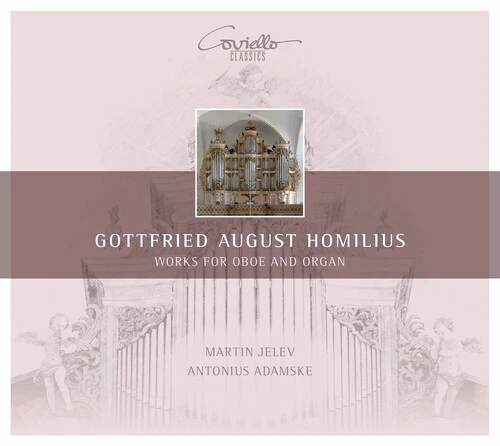
Homilius: Works for Oboe & Organ / Jelev, Adamske
Born in Rosenthal, Gottfried August Homilius (1714-1785) was organist at Dresden's Frauenkirche from 1742 onwards, and since 1755 he had been “Kreuzkantor” and music director at the three main churches in Dresden. Among the composer's most fascinating works are certainly his chorale preludes for organ with an obbligato melody instrument, primarily the oboe. This extraordinary practice allowed Homilius to perform the chorale theme more full-voiced and to process the musical material as artistically as he wished, without endangering the clear presence of the chorale melody, which is absolutely necessary for liturgical use, and which here is effectively taken over by the oboe.
Original: $15.99
-65%$15.99
$5.60More Images
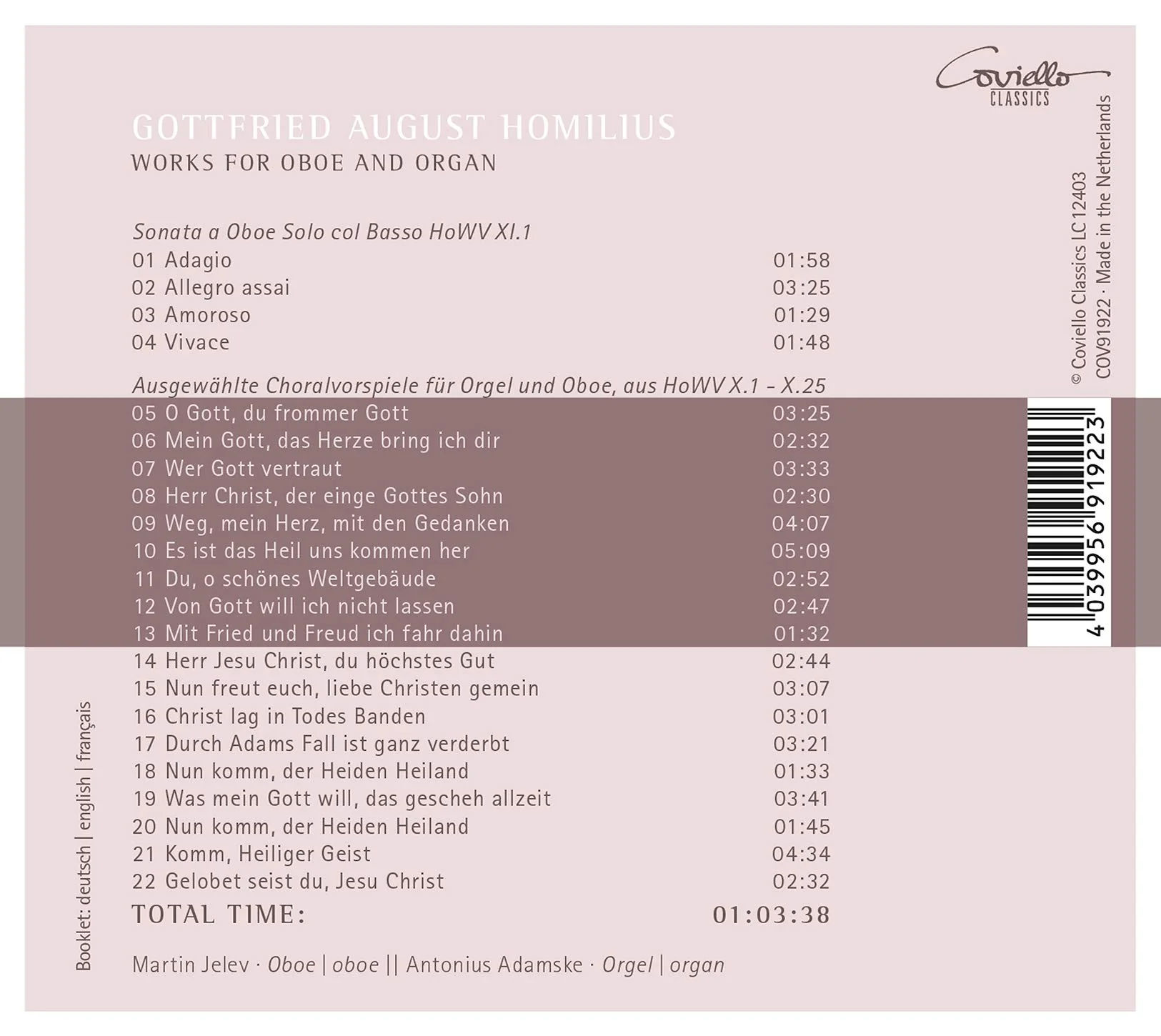
Homilius: Works for Oboe & Organ / Jelev, Adamske
Born in Rosenthal, Gottfried August Homilius (1714-1785) was organist at Dresden's Frauenkirche from 1742 onwards, and since 1755 he had been “Kreuzkantor” and music director at the three main churches in Dresden. Among the composer's most fascinating works are certainly his chorale preludes for organ with an obbligato melody instrument, primarily the oboe. This extraordinary practice allowed Homilius to perform the chorale theme more full-voiced and to process the musical material as artistically as he wished, without endangering the clear presence of the chorale melody, which is absolutely necessary for liturgical use, and which here is effectively taken over by the oboe.
Product Information
Product Information
Shipping & Returns
Shipping & Returns
Description
Born in Rosenthal, Gottfried August Homilius (1714-1785) was organist at Dresden's Frauenkirche from 1742 onwards, and since 1755 he had been “Kreuzkantor” and music director at the three main churches in Dresden. Among the composer's most fascinating works are certainly his chorale preludes for organ with an obbligato melody instrument, primarily the oboe. This extraordinary practice allowed Homilius to perform the chorale theme more full-voiced and to process the musical material as artistically as he wished, without endangering the clear presence of the chorale melody, which is absolutely necessary for liturgical use, and which here is effectively taken over by the oboe.


