✨ New Arrivals Just Dropped!Explore

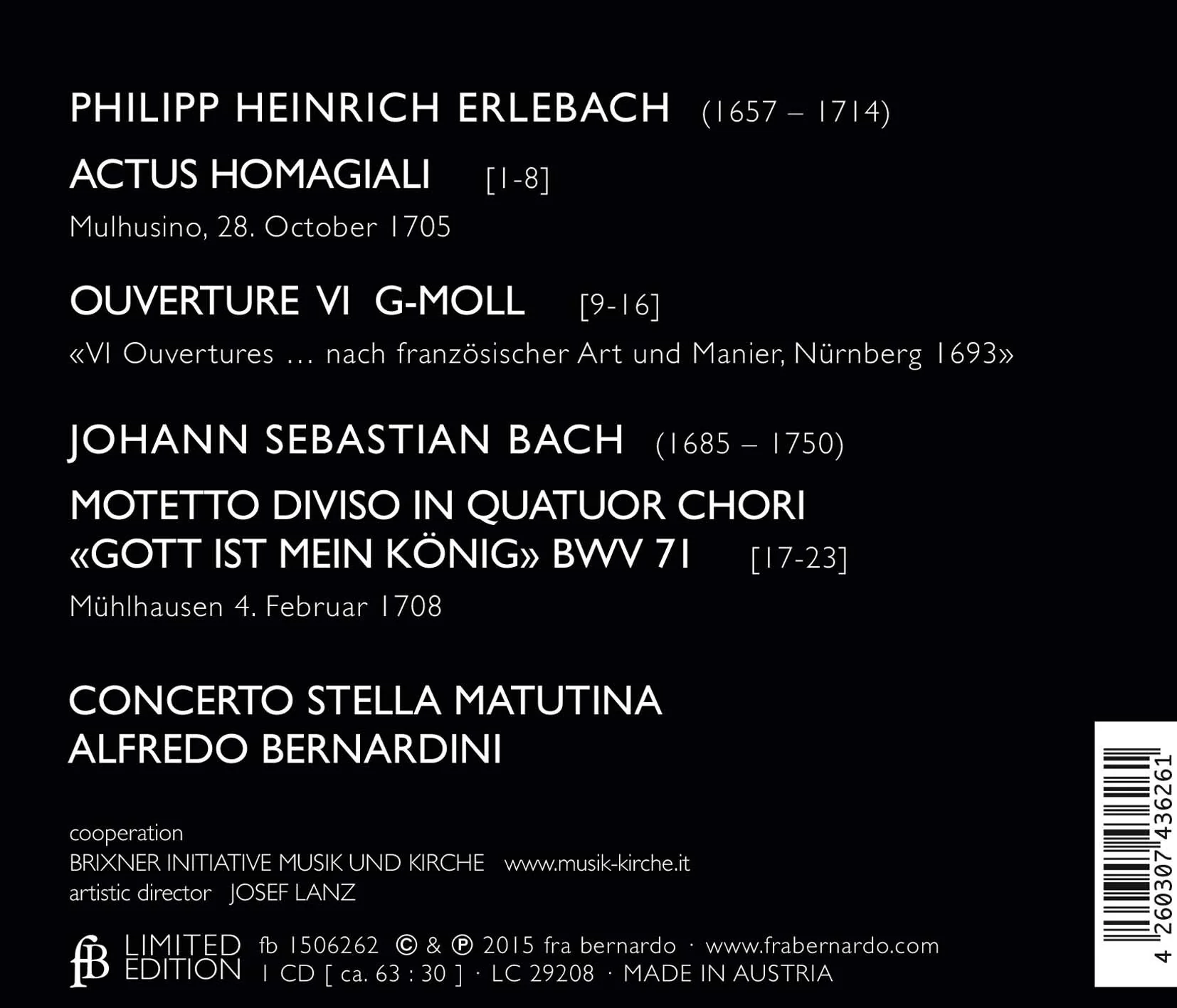
Josephs Neuer Kayser-Thron: Music of Erlebach and Bach
It was clearly of great importance at the start of the 18th century, both to the free imperial city of M�hlhausen in Thuringia and to distant Vienna, metropolis of the Holy Roman Empire, to be recognized and to record signs of both independence and affiliation to the empire and it's ruler. Two musical documents have survived in testimony. One owes it's prominence to the composer, Johann Sebastian Bach, the other, preserved in M�hlhausen's municipal archives and revived in performance today after more than three hundred years, is from the hand of Philipp Heinrich Erlebach.
$20.99
Josephs Neuer Kayser-Thron: Music of Erlebach and Bach—
$20.99
More Images
Josephs Neuer Kayser-Thron: Music of Erlebach and Bach
It was clearly of great importance at the start of the 18th century, both to the free imperial city of M�hlhausen in Thuringia and to distant Vienna, metropolis of the Holy Roman Empire, to be recognized and to record signs of both independence and affiliation to the empire and it's ruler. Two musical documents have survived in testimony. One owes it's prominence to the composer, Johann Sebastian Bach, the other, preserved in M�hlhausen's municipal archives and revived in performance today after more than three hundred years, is from the hand of Philipp Heinrich Erlebach.
Product Information
Product Information
Shipping & Returns
Shipping & Returns
Description
It was clearly of great importance at the start of the 18th century, both to the free imperial city of M�hlhausen in Thuringia and to distant Vienna, metropolis of the Holy Roman Empire, to be recognized and to record signs of both independence and affiliation to the empire and it's ruler. Two musical documents have survived in testimony. One owes it's prominence to the composer, Johann Sebastian Bach, the other, preserved in M�hlhausen's municipal archives and revived in performance today after more than three hundred years, is from the hand of Philipp Heinrich Erlebach.


