✨ New Arrivals Just Dropped!Explore
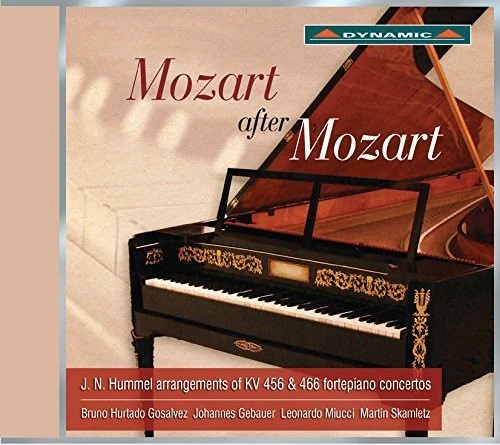
Mozart after Mozart (Arr. J.N. Hummel)
Hummel’s affinity with Mozart’s musical language began in 1786, when the very young Johann Nepomuk lodged with the Mozart family in their home for two years. • Hummel’s interest in, and knowledge of his teacher’s works for fortepiano and orchestra is attested by many accounts. • This recognized authority, added to the widespread approval he enjoyed as a composer, created the context in which Hummel produced his numerous transcriptions (approx. 50), scored principally for flute, violin, cello and fortepiano, applying now-historically valuable improvisatory practice solutions as well.
$18.99
Mozart after Mozart (Arr. J.N. Hummel)—
$18.99
More Images

Mozart after Mozart (Arr. J.N. Hummel)
Hummel’s affinity with Mozart’s musical language began in 1786, when the very young Johann Nepomuk lodged with the Mozart family in their home for two years. • Hummel’s interest in, and knowledge of his teacher’s works for fortepiano and orchestra is attested by many accounts. • This recognized authority, added to the widespread approval he enjoyed as a composer, created the context in which Hummel produced his numerous transcriptions (approx. 50), scored principally for flute, violin, cello and fortepiano, applying now-historically valuable improvisatory practice solutions as well.
Product Information
Product Information
Shipping & Returns
Shipping & Returns
Description
Hummel’s affinity with Mozart’s musical language began in 1786, when the very young Johann Nepomuk lodged with the Mozart family in their home for two years. • Hummel’s interest in, and knowledge of his teacher’s works for fortepiano and orchestra is attested by many accounts. • This recognized authority, added to the widespread approval he enjoyed as a composer, created the context in which Hummel produced his numerous transcriptions (approx. 50), scored principally for flute, violin, cello and fortepiano, applying now-historically valuable improvisatory practice solutions as well.