✨ New Arrivals Just Dropped!Explore

Praga Magna / Capella Mariana
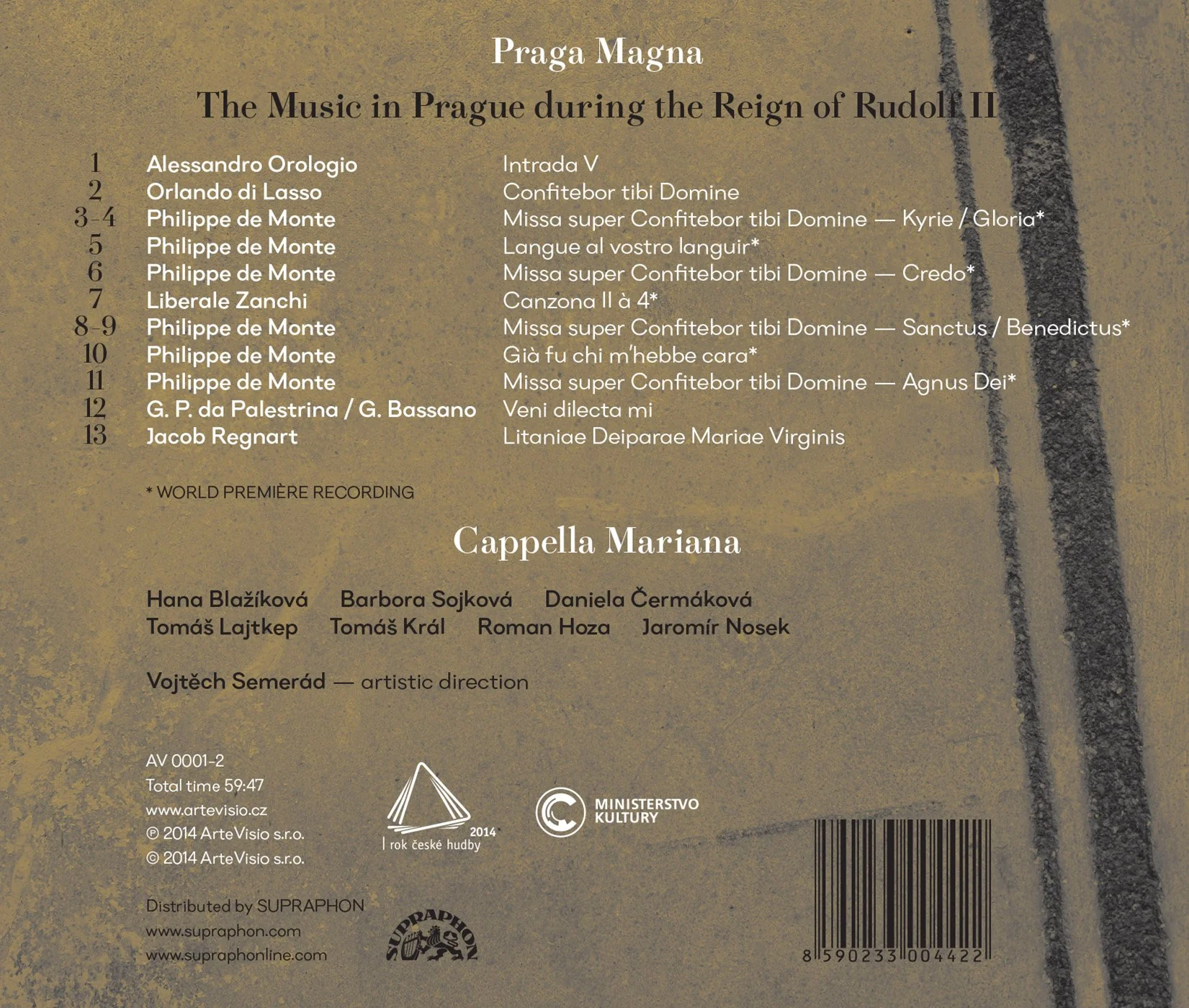
Towards the end of the 16th c., Emperor Rudolf II moved the Habsburg capital from Vienna to Prague, inviting to his court the finest contemporary artists and turning the provincial city into a European culture center. The core of this recording is the Missa Confitebor tibi Domine for 8 voices by the Rudolfine Kapellmeister Philippe de Monte (1521–1603), the last of the great creators of Franco-Flemish polyphony. The Cappella Mariana presents a repertoire typical of their focus - discovering and performing lesser-known Renaissance polyphonic pieces; often giving their modern-day premieres.
$28.99
Praga Magna / Capella Mariana—
$28.99
More Images
Praga Magna / Capella Mariana
Towards the end of the 16th c., Emperor Rudolf II moved the Habsburg capital from Vienna to Prague, inviting to his court the finest contemporary artists and turning the provincial city into a European culture center. The core of this recording is the Missa Confitebor tibi Domine for 8 voices by the Rudolfine Kapellmeister Philippe de Monte (1521–1603), the last of the great creators of Franco-Flemish polyphony. The Cappella Mariana presents a repertoire typical of their focus - discovering and performing lesser-known Renaissance polyphonic pieces; often giving their modern-day premieres.
Product Information
Product Information
Shipping & Returns
Shipping & Returns
Description
Towards the end of the 16th c., Emperor Rudolf II moved the Habsburg capital from Vienna to Prague, inviting to his court the finest contemporary artists and turning the provincial city into a European culture center. The core of this recording is the Missa Confitebor tibi Domine for 8 voices by the Rudolfine Kapellmeister Philippe de Monte (1521–1603), the last of the great creators of Franco-Flemish polyphony. The Cappella Mariana presents a repertoire typical of their focus - discovering and performing lesser-known Renaissance polyphonic pieces; often giving their modern-day premieres.