✨ New Arrivals Just Dropped!Explore
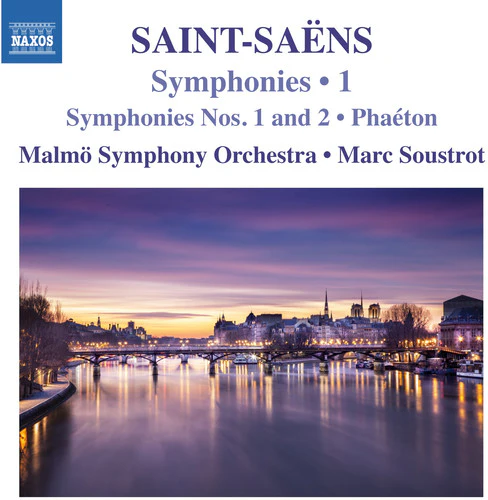
Saint-saens: Symphonies No 1 & 2 / Soustrot, Malmo
All of Saint-Saëns’ symphonies have been thrown into the shadows by the popularity of the last of them, the famous “Organ” Symphony (No. 3). This is a pity, because the others are very enjoyable and rewarding pieces. The First, dating from 1852 when the composer was only seventeen, features a finale whose scoring includes saxhorns, cymbals, and four harps, and it reveals a composer who, despite his classical leanings, wasn’t afraid to challenge convention. The more modestly scored Second Symphony of seven years later continues that trend, sporting a contrapuntal opening movement that’s remarkably assured and formally successful.
The standard reference versions for these works have been Martinon’s EMI (now Warner) recordings, but Soustrot’s are different enough to justify duplication. In the First Symphony, particularly, Soustrot adopts a very slow, dreamy tempo for the Adagio, but it works very well, particularly in contrast to the bold and brassy finale which follows without a break. Soustrot correctly highlights the adventurous writing for the harps, but never tastelessly, and some listeners may feel that the interpretation finds additional expressive depth in music often denigrated as merely sentimental. It’s good to hear it played with no apologies.
In the Second Symphony Soustrot comes closer to Martinon in terms of timing, but there’s no denying the extra clarity and nimbleness of the Malmö ensemble as compared to the old French National Radio and Television Orchestra for EMI. Soustrot’s exciting and rhythmically sharp reading of Phaéton makes a welcome bonus. This is unquestionably one of the best recordings of the piece, with an especially effective thunderbolt as Zeus hurls the hapless chariot (of the sun) driver from his seat. Attractively natural sonics round out a very promising start to this new series.
-- David Hurwitz, ClassicsToday.com
The standard reference versions for these works have been Martinon’s EMI (now Warner) recordings, but Soustrot’s are different enough to justify duplication. In the First Symphony, particularly, Soustrot adopts a very slow, dreamy tempo for the Adagio, but it works very well, particularly in contrast to the bold and brassy finale which follows without a break. Soustrot correctly highlights the adventurous writing for the harps, but never tastelessly, and some listeners may feel that the interpretation finds additional expressive depth in music often denigrated as merely sentimental. It’s good to hear it played with no apologies.
In the Second Symphony Soustrot comes closer to Martinon in terms of timing, but there’s no denying the extra clarity and nimbleness of the Malmö ensemble as compared to the old French National Radio and Television Orchestra for EMI. Soustrot’s exciting and rhythmically sharp reading of Phaéton makes a welcome bonus. This is unquestionably one of the best recordings of the piece, with an especially effective thunderbolt as Zeus hurls the hapless chariot (of the sun) driver from his seat. Attractively natural sonics round out a very promising start to this new series.
-- David Hurwitz, ClassicsToday.com
$19.99
Saint-saens: Symphonies No 1 & 2 / Soustrot, Malmo—
$19.99
Saint-saens: Symphonies No 1 & 2 / Soustrot, Malmo
All of Saint-Saëns’ symphonies have been thrown into the shadows by the popularity of the last of them, the famous “Organ” Symphony (No. 3). This is a pity, because the others are very enjoyable and rewarding pieces. The First, dating from 1852 when the composer was only seventeen, features a finale whose scoring includes saxhorns, cymbals, and four harps, and it reveals a composer who, despite his classical leanings, wasn’t afraid to challenge convention. The more modestly scored Second Symphony of seven years later continues that trend, sporting a contrapuntal opening movement that’s remarkably assured and formally successful.
The standard reference versions for these works have been Martinon’s EMI (now Warner) recordings, but Soustrot’s are different enough to justify duplication. In the First Symphony, particularly, Soustrot adopts a very slow, dreamy tempo for the Adagio, but it works very well, particularly in contrast to the bold and brassy finale which follows without a break. Soustrot correctly highlights the adventurous writing for the harps, but never tastelessly, and some listeners may feel that the interpretation finds additional expressive depth in music often denigrated as merely sentimental. It’s good to hear it played with no apologies.
In the Second Symphony Soustrot comes closer to Martinon in terms of timing, but there’s no denying the extra clarity and nimbleness of the Malmö ensemble as compared to the old French National Radio and Television Orchestra for EMI. Soustrot’s exciting and rhythmically sharp reading of Phaéton makes a welcome bonus. This is unquestionably one of the best recordings of the piece, with an especially effective thunderbolt as Zeus hurls the hapless chariot (of the sun) driver from his seat. Attractively natural sonics round out a very promising start to this new series.
-- David Hurwitz, ClassicsToday.com
The standard reference versions for these works have been Martinon’s EMI (now Warner) recordings, but Soustrot’s are different enough to justify duplication. In the First Symphony, particularly, Soustrot adopts a very slow, dreamy tempo for the Adagio, but it works very well, particularly in contrast to the bold and brassy finale which follows without a break. Soustrot correctly highlights the adventurous writing for the harps, but never tastelessly, and some listeners may feel that the interpretation finds additional expressive depth in music often denigrated as merely sentimental. It’s good to hear it played with no apologies.
In the Second Symphony Soustrot comes closer to Martinon in terms of timing, but there’s no denying the extra clarity and nimbleness of the Malmö ensemble as compared to the old French National Radio and Television Orchestra for EMI. Soustrot’s exciting and rhythmically sharp reading of Phaéton makes a welcome bonus. This is unquestionably one of the best recordings of the piece, with an especially effective thunderbolt as Zeus hurls the hapless chariot (of the sun) driver from his seat. Attractively natural sonics round out a very promising start to this new series.
-- David Hurwitz, ClassicsToday.com
Product Information
Product Information
Shipping & Returns
Shipping & Returns
Description
All of Saint-Saëns’ symphonies have been thrown into the shadows by the popularity of the last of them, the famous “Organ” Symphony (No. 3). This is a pity, because the others are very enjoyable and rewarding pieces. The First, dating from 1852 when the composer was only seventeen, features a finale whose scoring includes saxhorns, cymbals, and four harps, and it reveals a composer who, despite his classical leanings, wasn’t afraid to challenge convention. The more modestly scored Second Symphony of seven years later continues that trend, sporting a contrapuntal opening movement that’s remarkably assured and formally successful.
The standard reference versions for these works have been Martinon’s EMI (now Warner) recordings, but Soustrot’s are different enough to justify duplication. In the First Symphony, particularly, Soustrot adopts a very slow, dreamy tempo for the Adagio, but it works very well, particularly in contrast to the bold and brassy finale which follows without a break. Soustrot correctly highlights the adventurous writing for the harps, but never tastelessly, and some listeners may feel that the interpretation finds additional expressive depth in music often denigrated as merely sentimental. It’s good to hear it played with no apologies.
In the Second Symphony Soustrot comes closer to Martinon in terms of timing, but there’s no denying the extra clarity and nimbleness of the Malmö ensemble as compared to the old French National Radio and Television Orchestra for EMI. Soustrot’s exciting and rhythmically sharp reading of Phaéton makes a welcome bonus. This is unquestionably one of the best recordings of the piece, with an especially effective thunderbolt as Zeus hurls the hapless chariot (of the sun) driver from his seat. Attractively natural sonics round out a very promising start to this new series.
-- David Hurwitz, ClassicsToday.com
The standard reference versions for these works have been Martinon’s EMI (now Warner) recordings, but Soustrot’s are different enough to justify duplication. In the First Symphony, particularly, Soustrot adopts a very slow, dreamy tempo for the Adagio, but it works very well, particularly in contrast to the bold and brassy finale which follows without a break. Soustrot correctly highlights the adventurous writing for the harps, but never tastelessly, and some listeners may feel that the interpretation finds additional expressive depth in music often denigrated as merely sentimental. It’s good to hear it played with no apologies.
In the Second Symphony Soustrot comes closer to Martinon in terms of timing, but there’s no denying the extra clarity and nimbleness of the Malmö ensemble as compared to the old French National Radio and Television Orchestra for EMI. Soustrot’s exciting and rhythmically sharp reading of Phaéton makes a welcome bonus. This is unquestionably one of the best recordings of the piece, with an especially effective thunderbolt as Zeus hurls the hapless chariot (of the sun) driver from his seat. Attractively natural sonics round out a very promising start to this new series.
-- David Hurwitz, ClassicsToday.com